Managing a commercial property requires a constant focus on controlling operational costs and maximizing efficiency. For many businesses, monthly utility bills represent one of the largest ongoing overhead expenses, particularly in large office spaces with extensive glass facades. While upgrading heating and cooling systems or switching to intelligent lighting can yield positive results, the root cause of high energy bills often traces back to outdated, poorly insulated windows. Upgrading to modern UPVC windows is a highly strategic corporate investment that addresses thermal waste directly, providing an effective way to slash commercial energy overhead and improve your bottom line.
The primary financial drain from inefficient commercial windows stems from thermal transfer. Standard single-paned glass or older aluminum frames easily conduct outside temperatures, turning an office into a greenhouse during summer months and a freezing draft zone during winter. This continuous temperature fluctuation forces commercial heating, ventilation, and air conditioning systems to run constantly at peak capacity to maintain a comfortable working environment. This continuous cycling not only spikes electricity and gas consumption but also accelerates the wear and tear on expensive HVAC equipment, leading to premature maintenance costs. UPVC, or Unplasticized Polyvinyl Chloride, provides a robust solution because the material is a natural thermal insulator that resists temperature transfer.
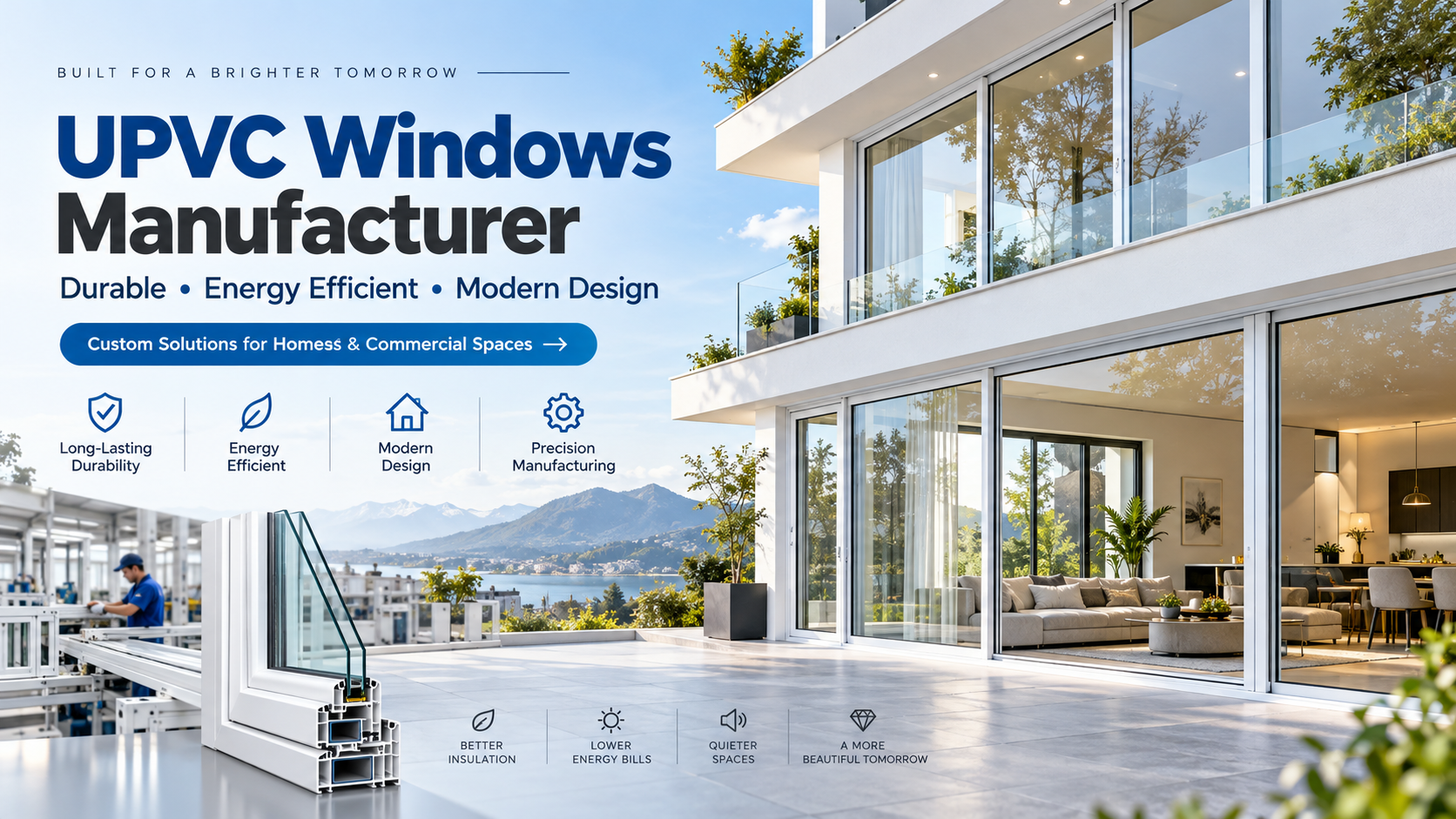
The internal architecture of modern UPVC office windows is engineered specifically to trap air and prevent energy loss. The frames feature advanced multi-chambered profiles that create sequential barriers against external heat and cold. When these non-conductive frames are paired with specialized commercial double or triple glazing, the thermal efficiency increases dramatically. The precision-engineered gap between the glass panes is filled with an inert gas like argon, which further slows down heat migration. During the peak of summer, these windows deflect intense solar heat radiation, keeping the interior cool naturally. In colder winter months, they retain the ambient heat generated indoors, ensuring your corporate heating systems operate with minimal exertion.
Beyond the immediate reductions in monthly energy spending, installing UPVC windows eliminates the hidden overhead costs associated with facility maintenance. Unlike traditional timber frames that demand regular painting, sanding, and sealing to avoid structural decay, UPVC requires virtually zero ongoing maintenance. The material is entirely impervious to rot, rust, corrosion, and weather damage, meaning its airtight seals and thermal efficiency will remain fully intact for decades without constant financial reinvestment.
Ultimately, choosing to install UPVC windows shifts your relationship with your commercial property from a state of ongoing energy loss to a state of sustained financial recovery. The compounding monthly savings on your utility bills steadily offset the initial installation capital. By protecting your internal climate, reducing HVAC strain, and eliminating heavy maintenance expenses, UPVC windows stand out as an indispensable tool for cutting commercial overhead and driving long-term corporate sustainability.
Contact Us
Kiran Pawar Sir
Email id : ultrainex@gmail.com
Call: +91 -75064 40822